Tag Archives: Fertility treatment

IVF: A Modern Fertility Solution to Help You Achieve Parenthood

For many couples, starting a family is a cherished dream. However, infertility can make the journey to parenthood challenging and emotionally overwhelming. Fortunately, advancements in reproductive medicine have transformed fertility care, offering effective solutions for couples facing difficulties in conceiving.

In Vitro Fertilization (IVF) is one of the most successful and widely used fertility treatments available today. It has helped millions of individuals and couples worldwide achieve successful pregnancies when natural conception has not been possible.

Under the expert guidance of Dr. Aindri Sanyal, patients receive comprehensive fertility evaluation, personalized treatment plans, and compassionate support throughout their fertility journey.

What is IVF?

In Vitro Fertilization (IVF) is an advanced assisted reproductive technology (ART) in which eggs are fertilized by sperm in a specialized laboratory outside the body. The resulting embryo is then transferred into the uterus, where it may implant and develop into a pregnancy.

The IVF Process Includes:

1. Ovarian Stimulation

Special fertility medications stimulate the ovaries to produce multiple mature eggs.

2. Egg Retrieval

The eggs are collected through a minimally invasive procedure performed under sedation.

3. Fertilization

The eggs are combined with sperm in the laboratory. In some cases, ICSI (Intracytoplasmic Sperm Injection) may be used.

4. Embryo Culture

The fertilized eggs develop into embryos under carefully controlled laboratory conditions.

5. Embryo Transfer

One or more healthy embryos are transferred into the uterus.

6. Pregnancy Testing

A blood test is performed approximately two weeks after embryo transfer to determine if pregnancy has been achieved.

When Should You Seek Treatment?

You should consider consulting an infertility specialist if:

  • You have been trying to conceive for over one year without success
  • You are over 35 years of age and have been trying for six months or longer
  • You have irregular or absent menstrual cycles
  • You have a history of recurrent miscarriages
  • You have known reproductive health issues
  • You have undergone unsuccessful fertility treatments
  • You have been diagnosed with male factor infertility

Common Conditions Treated with IVF

  • Blocked fallopian tubes
  • Polycystic Ovary Syndrome (PCOS)
  • Endometriosis
  • Male infertility
  • Ovulation disorders
  • Unexplained infertility
  • Age-related fertility decline
  • Recurrent IVF or fertility treatment failure

Early fertility assessment can help identify the most effective treatment strategy.

Why is IVF Recommended?

IVF is recommended when natural conception is unlikely or when other fertility treatments have not been successful.

Benefits of IVF

Higher Pregnancy Success Rates

IVF offers one of the highest success rates among fertility treatments.

Treatment for Multiple Causes of Infertility

It can address both male and female infertility factors simultaneously.

Advanced Fertility Options

IVF can be combined with:

  • ICSI
  • Embryo freezing
  • Egg freezing
  • Genetic testing of embryos (PGT)
  • Donor egg or sperm programs

Personalized Treatment Plans

Every IVF cycle is tailored according to the patient’s age, fertility diagnosis, and reproductive goals.

Fertility Preservation

IVF allows embryos and eggs to be preserved for future pregnancy attempts.

Hope After Previous Treatment Failure

Many couples achieve success through IVF after unsuccessful attempts with other fertility treatments.

Risks and Complications

IVF is generally safe; however, patients should understand potential risks.

Possible Risks Include:

Ovarian Hyperstimulation Syndrome (OHSS)

A reaction to fertility medications that can cause ovarian enlargement and discomfort.

Multiple Pregnancy

Transferring multiple embryos may increase the chance of twins or higher-order pregnancies.

Ectopic Pregnancy

In rare cases, the embryo may implant outside the uterus.

Miscarriage

The risk varies depending on age and embryo quality.

Emotional Stress

The fertility journey can be physically and emotionally demanding.

Procedure-Related Risks

Egg retrieval carries a small risk of bleeding, infection, or anesthesia-related complications.

Careful monitoring throughout treatment helps minimize these risks.

Frequently Asked Questions (FAQ)

What does IVF stand for?

IVF stands for In Vitro Fertilization, a fertility treatment in which fertilization occurs outside the body in a laboratory.

Is IVF painful?

Most IVF procedures are well tolerated. Egg retrieval is performed under sedation to ensure patient comfort.

How successful is IVF?

Success rates vary based on factors such as age, ovarian reserve, sperm quality, embryo quality, and overall reproductive health.

How many IVF cycles are usually needed?

Some patients achieve pregnancy during the first cycle, while others may require multiple cycles depending on their fertility profile.

Can IVF help with male infertility?

Yes. IVF, especially when combined with ICSI, can be highly effective in cases of male factor infertility.

How long does an IVF cycle take?

A typical IVF cycle usually takes approximately 4 to 6 weeks from ovarian stimulation to pregnancy testing.

Can frozen embryos be used later?

Yes. Cryopreserved embryos can be stored and used in future treatment cycles.

Are IVF babies healthy?

Most babies born through IVF are healthy and develop normally. IVF is a well-established and widely practiced fertility treatment.

About Dr. Aindri Sanyal

Dr. Aindri Sanyal
MBBS, MD
Fellowship in Reproductive Medicine

Infertility Specialist | IVF Specialist

Dr. Aindri Sanyal specializes in fertility evaluation, IVF, assisted reproductive technologies, recurrent pregnancy loss management, and advanced infertility treatments. With a patient-focused approach and expertise in reproductive medicine, she is committed to helping individuals and couples achieve their dream of parenthood through evidence-based fertility care.

Call to Action (CTA)

Infertility can be challenging, but you do not have to face it alone. Modern fertility treatments such as IVF have helped countless couples successfully build their families.

If you have been struggling to conceive or would like to explore advanced fertility treatment options, schedule a consultation with Dr. Aindri Sanyal today. Personalized fertility care and expert guidance can help bring you closer to achieving your dream of parenthood.
From Uncertainty to Parenthood: A Couple’s Journey with TESA-ICSI Treatment

Introduction: When Hope Meets Unexpected Challenges

At 35, Ankit and Riya had been trying to conceive for several years. Like many couples, they began their journey with excitement and hope. However, as months turned into years, repeated unsuccessful attempts led to growing concern and emotional distress.

While Riya’s health evaluations appeared normal, the couple struggled to understand why conception was not happening. The uncertainty began to affect their confidence and emotional well-being.

Struggles and Failed Attempts

In their search for infertility treatment, they explored multiple options:

  • Lifestyle changes and diet adjustments
  • Basic fertility medications
  • Timed ovulation cycles

Despite their efforts, there was no success. The emotional toll of repeated disappointment made them realize the need for specialized evaluation and advanced reproductive care.

Consultation and Diagnosis

Determined to find answers, they consulted Dr. Aindri Sanyal, an expert in advanced fertility treatments.

After comprehensive testing, Ankit was diagnosed with Male Infertility, specifically a condition where sperm was not present in the ejaculate (azoospermia).

Dr. Sanyal explained the condition in a clear and reassuring manner and recommended an advanced assisted reproductive technique—Testicular Sperm Aspiration combined with Intracytoplasmic Sperm Injection (TESA-ICSI).

The Turning Point: Choosing TESA-ICSI

The diagnosis initially came as a shock. However, learning that solutions were available brought renewed hope.

TESA-ICSI involves retrieving sperm directly from the testes and injecting a single sperm into the egg to achieve fertilization. This technique is highly effective in cases of male infertility where natural conception is not possible.

With detailed counseling and emotional support, the couple decided to proceed with the treatment.

Understanding TESA-ICSI and Its Benefits

Testicular Sperm Aspiration combined with Intracytoplasmic Sperm Injection is a breakthrough in infertility treatment.

Key benefits include:

  • Effective solution for severe male infertility
  • High precision fertilization process
  • Increased chances of successful conception
  • Minimally invasive sperm retrieval

This advanced approach has helped many couples overcome complex fertility challenges.

Treatment and Recovery Journey

The treatment process was carefully planned and executed:

  • Sperm retrieval was performed using TESA
  • Eggs were collected and fertilized using ICSI
  • Healthy embryos were developed and transferred

Throughout the process, the couple received continuous support and guidance. The waiting period after embryo transfer was filled with hope and anticipation.

Final Outcome: A Dream Realized

Soon, the couple received life-changing news—a positive pregnancy result.

Today, Ankit and Riya are on their journey to parenthood, filled with happiness and gratitude. Their experience highlights how advanced fertility treatments and expert care can transform even the most challenging situations into success stories.

Frequently Asked Questions (FAQ): TESA-ICSI

What is TESA-ICSI?

Testicular Sperm Aspiration combined with Intracytoplasmic Sperm Injection is a fertility treatment where sperm is retrieved directly from the testes and injected into the egg.

Who needs TESA-ICSI?

It is recommended for men with severe Male Infertility, including azoospermia.

Is the procedure safe?

Yes, it is a well-established and safe procedure when performed by an experienced infertility specialist.

How long does the process take?

A full cycle, including IVF and ICSI, typically takes a few weeks, depending on individual response.

What are the success rates?

Success rates vary based on age, health, and underlying conditions, but TESA-ICSI significantly improves the chances of conception in male infertility cases.

Conclusion: Turning Challenges into Possibilities

Infertility can be emotionally challenging, especially when it involves complex conditions like male infertility. However, with advancements in reproductive medicine and expert care from specialists like Dr. Aindri Sanyal, effective solutions are available.

Ankit and Riya’s journey is a testament to the power of medical innovation, perseverance, and compassionate care. With the right guidance and treatment, the dream of parenthood can become a reality.

If you are facing similar challenges, seeking timely expert advice can be the first step toward hope, healing, and a new beginning.

Diabetes: How does it affect fertility?

Diabetes and infertility

Scientific research has established that uncontrolled diabetes can affect fertility and reproductive health in both men and women. It is linked to hormonal disruptions, poor sperm quality and DNA damage, often resulting in irregular or absent menstrual cycles in women, while men could find it difficult to achieve and maintain erections.

What effect does diabetes have on fertility?

Diabetes can have different repercussions among women and men in terms of affecting fertility.

In women:

Infections: Women with diabetes are more prone to infections and damage to their reproductive organs, most commonly, the fallopian tubes.

Complications with pregnancy: Uncontrolled blood sugar levels can lead tomiscarriage or congenital defects in the foetus or even to ‘big baby syndrome’ or macrosomia.

Subdued libido: Most women with diabetes would suffer from fatigue, increased anxiety and depression, which could lead todecreased sexual desire. They can also feel pain and discomfort during sex because of decreased vaginal lubrication.

PCOS: Type 2 diabetes and obesity are also linked to PCOS or Polycystic Ovarian Syndrome, a metabolic disorder characterized by an excess of male hormones.

Anti-sperm antibodies: Diabetes can produce antibodies which may attack the sperms and even her eggs.

In men:

Sexual dysfunction: Men with diabetes often find it difficult to maintain an erection leading to infertility.

Decreased libido: Diabetic men also suffer from fatigue, weakness and loss of sexual drive, since certain areas of the brain don’t receive enough glucose, which is the only source of energy.

Damage to sperm DNA: Men with diabetes can experience impaired reproductive potency because of increased nuclear, mitochondrial and DNA damage.

Poor sperm quality: Type 2 diabetes is linked to poor sperm concentration in semen and also sub-par motility. Structural damage to the sperm and its DNA are also commonplace.

How is diabetes-related infertility treated?

A more holistic approach involving the couple’s respective family and medical histories is the ideal strategy. The aim is to achieve better control over the glycemic level and reproductive hormones and functions.

Some of the treatment options available are:

Medications: Treatment approach often startswith medications to stimulate ovulation in women, besides treating infections. Medications (sometimes coupled with hormonal supplements) are also used to treat issues like erectile dysfunction and premature ejaculation in men.

Surgical management: Surgical management often becomes a necessity to treat some cases of PCOS, uterine fibroids, trauma injuries, etc.

Advanced reproductive technologies (ART): For men, ART experts use procedures forsperm retrieval and intracytoplasmic sperm injection. For women, the methods generally deployed are in-vitro fertilization, intrauterine inseminationand assisted laser hatching.

However, it’s not all gloom and doom if you have diabetes and planning to start a family. It just requires early and comprehensive planning involving multiple specialties including endocrinologist, gynecologist and andrologist. The goal is to maintain your blood glucose levels at an optimum range to facilitate conception and maintain pregnancy till full-term. It’s all about cutting risks, watching your weight, eating right and meticulously following the advice of the doctors. Sometimes it will be absolutely necessary to seek help from a fertility expert as well.

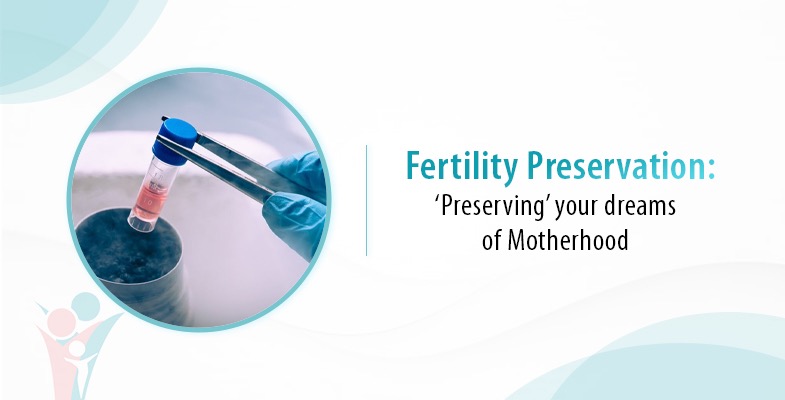
Fertility Preservation: ‘Preserving’ your dreams of Motherhood

Fertility Preservation

Breast cancer is regarded as the most prevalent malignancy in women and usually, the incidence is higher among older women, a majority diagnosed post-menopause. However, a large number of young women too are diagnosed with breast cancer during their reproductive lifespan. A lot of these patients experience difficulty conceiving after cytotoxic chemotherapy and/or hormone therapy.

With increasing positive outcomes in breast cancer treatment thanks to rapid advances in methods and techniques in modern medicine, it is becoming more and more relevant to consider fertility preservation in these patients. Fertility preservation is “the process of saving or protecting eggs, sperm, or embryo” to enable a person to use them to conceive in future.

The key to successful fertility preservation in cancer patients is early counseling and a prompt referral to a reproductive specialist. This gives the patients and their spouses/kin adequate time to make an informed decision on an appropriate method of fertility preservation, since there are a whole host of linkages between cancer diagnosis and fertility to consider and it can be really overwhelming.

What are available options of fertility preservation for breast cancer patients?

The currently used methods include: Cryopreservation of embryos; Oocytes cryopreservation; Gonadotropin-releasing hormone agonist treatment before and during chemotherapy; Ovarian transposition.

The most suitable method of fertility preservation is usually arrived at following a threadbare discussion of all the pros and cons between patients and doctors.

The entire process of fertility preservation following a breast cancer diagnosis can be traumatizing and confusing for couples. Men can bank their sperm without much ado, but for women, it’s a little more complicated. Cryopreservation of embryos is a commonly used technique these days for preserving fertility for use in assisted reproductive technology like IVF or in-vitro fertilization.

Who else can benefit from fertility preservation?

Individuals afflicted with certain illnesses or disorders which affect fertility could also benefit from fertility preservation. These include:

  • Those who have been exposed to toxic chemicals
  • Those suffering from endometriosis
  • Those having uterine fibroids
  • Patients needing treatment for an autoimmune disease
  • Those having a genetic disorder affecting fertility
  • Women who push back childbearing

Studies have shown that women diagnosed with breast cancer who have completed their treatment, “had no increased risk of relapse” if they delivered a baby following conception through IVF techniques. Overall, there is “no clear evidence” that ovulation induction or IVF increases the risk of breast cancer. The same studies on breast cancer patients also reveal that pregnancy and childbirth are not known to increase the risk of relapse.

Psychological impact of fertility treatment : How to cope with it

Fertility Treatment

The inability to conceive a child despite trying for long can have a devastating psychological impact, and millions of couples around the world affected by infertility have to deal with this unfathomable sense of loss and grief, leading to great emotional upheavals. It’s not easy to cope with the plethora of critical medical decisions and the uncertainty about outcomes associated with fertility treatment.

Often, it’s the worst life crisis that can confront a couple which, apart from the overwhelming sense of loss, can also trigger anger, guilt and shame. It can lead to depression, anxiety and a terrible feeling of alienation. Just remember that coming to grips with infertility, the subsequent decision to go for assisted reproduction and the psychological impact of the treatment, is not easy and sometimes you will need support from a certified mental health professional. It’s very important to know that you are not alone in this journey.

When should you seek psychological counseling?

Infertility treatmentcould be an emotional rollercoaster for most couples, and feeling overwhelmed is perfectly normal. You need to talk to the treating doctor and counselor in case you are feeling like any of these:

  • Losing interest in normal activities
  • A sense of depression that engulfs you
  • You feel your relationship with your partner and others is on the edge
  • Can’t take your mind off your infertility problem
  • Feel anxious all the time
  • Detect a fall in your efficiency levels
  • Have trouble concentrating
  • Experience difficulty in sleeping
  • Find a change in appetite or weight
  • Have suicidal thoughts
  • Shun company
  • Experience a constant sense of guilt, bitterness or anger

How can counseling help you cope better?

  • The primary goal of the counselor is to help couples cope better with the physical and emotional factors linked to infertility, and the medical treatments.
  • Choosing the right medical treatment or exploring other family-building options can be a tough decision where your infertility specialist and the counselor can play a big role.
  • A counselor can teach you deal with stress, anxiety or depression by using problem-solving techniques which can help you cope better with grief, fear, and other negative emotions.
  • We all have in-built coping skills which sometimes take a backseat when a sense of grief and futility overwhelms us. Therapy prior to and during the treatment can help in re-charging those skills and help in achieving a place of positivity and hope.
  • These exercises could also often turn the life crisis of infertility on its head to help the individual/couple embrace rewarding pursuits for progress, armed with more clarity of thought.
  • Sometimes, the hormones used in infertility treatment affect the mood of the patient, prior knowledge and understanding can help a person to cope better. Counselingby the treating doctor and the therapist is a vital part of infertility treatment.
  • What can I do on my own to cope better?

    The journey through IVF could be very tough, and there’s no right or wrong way to feel about it. Emotions vary from person to person. However, you can try these simple steps to keep your negative emotions in check:

    Don’t fight your feelings: Acknowledge your feelings and emotions, don’t try to suppress or deny them, no matter how intense and destabilizing they are.

    Stay in the moment: Try and perceive your emotions as a passing phenomenon, even if they are particularly painful. Tell yourself, “Tomorrow will be better”.

    Talk to people: Opening up about your feelings and secret fears to someone you can lean on can really help. It could be your partner, a family member or a close friend or colleague. It strengthens the sense of not being alone in your fertility journey.

    Focus on what you can control: There are only certain things which are in your grasp, like when you would like to start a treatment cycle, the length of break between cycles, or when to seek another opinion. Try to stay with these tangibles and remember to plan for the short term and keep your plans flexible.

    Stay informed: Get clear understanding of critical issues like treatment cost, success rates based on your specific circumstances and all the different treatment options available. This will help you make better choices and more confident about meeting challenges head-on.

    Medicines might help: For some people, antidepressant medications may be required for the treatment of depression and anxiety. Most of these can be safely used in pregnancy as well.

Not Convinced? Get a Second Opinion about Your Fertility Treatment

Fertility Treatment

Misha and Manoj were hoping to expand their family, but after trying for a year and a half, they realized there was a problem in conceiving naturally. They consulted a Doctor who recommended some tests. The results revealed that Misha had a blocked Fallopian tube and severely diminished ovarian reserve of 0.08 (extremely low egg supply) at 30. 

The recommendation was donor eggs, and as soon as possible, as her biological clock was ticking. On probing further as to why using donor eggs was the only way forward, the doctor refused to provide a convincing explanation. Misha got her sister tested as a donor but could not accept that her baby would not be biologically hers.

Something in the couple’s hearts told them that they needed a second opinion so they decided to schedule a consultation at a well-known fertility clinic after a friend highly recommended, they go there.

Misha was scared to death, felt defeated, and guilty as having a child was something, she had always taken for granted. But the fertility specialist made the couple feel comfortable right from the start. He took the time to explain to them what was happening and what their options were.

Misha and Manoj took their time and decided to proceed with IVF, one of the primary options suggested by the fertility specialist. They went through three IVF cycles. Cycle 1 was cancelled due to no viable embryos and cycle 2 resulted in a negative pregnancy test, but cycle 3 was different.

The third cycle yielded only two eggs at the retrieval. Although discouraged, both Misha and Manoj tried to remain optimistic. After all, it only takes one, right? Miraculously, both eggs fertilized normally and continued to grow. On day 3, both embryos were transferred and 2 weeks later, they received the news they had been waiting on for a year and a half – Misha was pregnant. The fertility journey, at last, felt so perfect and incredible.

Blessed with their miracle child, Madhur, the couple owes it all to the second opinion they’d taken.

If you are someone undergoing fertility treatment or have been thinking of seeking the second opinion then, here’s more about when you should consider seeking a second opinion and how to go prepared for the visit.

When should I think about seeking a second opinion?

If you’re not sure whether it’s time to look further afield, here are some of the most common reasons why you might seek a second opinion about your fertility treatment.

You’ve been under the care of your primary care doctor or OB-GYN and want to explore more specialized help

Many patients struggling with fertility first seek help with their own doctor. Your primary physician or gynaecologist may ask you to take some preliminary tests, recommend lifestyle changes or fertility therapies such as acupuncture, or prescribe you a fertility medication. If you’ve explored some or all of these options with your doctor and still haven’t gotten pregnant, it may make sense to seek a second opinion from a fertility expert.

You suspect that there may be more to your infertility diagnosis

While many cases of infertility are due to unknown causes, undergoing a thorough diagnosis is important. If you are worried that something has been missed or feel that more investigation is necessary, it may be a good idea to seek a second opinion.

You have had several unsuccessful IVF cycles with your current clinic

The truth is that some IVF cycles fail, even at the most popular clinics. The human reproductive system is complex and each patient is unique, so each fertility journey takes time to complete. However, if you have undergone three or more unsuccessful rounds of IVF and feel that you’re not getting any closer to good news, it could be time to look elsewhere.

You want to try something new that your current clinic can’t offer

Reproductive endocrinology is a rapidly evolving field and new research, technology, and best practices are constantly evolving. In your own research, if you find a new test or treatment you would like to explore and if your current clinic is not in a position to offer you the same, you may need to look for another clinic that can help you ensure that you have tried everything.

You have concerns about your relationship with your team

The rapport you share with your fertility specialist and treatment team is important. Yes, they are the experts, and you trust them to help you make the right choices, but you should also be informed about the decisions being made about your treatment.

  • You must always be comfortable asking questions and voicing concerns
  • Check if you are presented with just one option for treatment or
  • If the specialist is not taking the time to explain the treatment plan and the reasons behind it
  • If they are not informing you of possible risks

These could be signs to switch fertility specialists.

Your doctor recommends that you seek a second opinion

Sometimes, it may be a doctor who suggests seeking a second opinion. It does not indicate that yours is a difficult case. Your doctor may know a colleague who has more specific knowledge and experience in dealing with issues you are facing, or a clinic that has a higher success rate with patients who have similar case histories. An honest doctor will help you find the best possible treatment, even if it means handing over your case to another expert.

How should I choose which clinic to visit next?

Finding the right fertility clinic can be challenging, even if you’ve already been through the process before. While it can be a struggle to think about starting over or seeking a second opinion from a new fertility specialist or clinic, remember that you have knowledge and resources now that you did not have the first time.

Ask your doctor

If you have a good relationship with your current physician, this is something you can talk about with them. Ask them for a recommendation. At this point, they know your case and needs, and they may be able to refer you to someone who can move your treatment forward.

Reach out to your network

You are not alone in your experience of infertility or to get the answers you need. If you are not part of a support group or community of individuals undergoing fertility treatment, you can try exploring those resources. Talking to others who have the first-hand experience of different clinics and fertility specialists can be helpful.

Arrive prepared

There are some things you can do to make the visit for a qualified second opinion smoother.

  • Carry a copy of medical records and test results before visiting a fertility specialist
  • Bring the notes you have taken at your previous clinic visits
  • Prepare a list of questions to ask
  • If there are treatment procedures you would like to try, don’t hesitate to bring them up during the visit.