
Tag Archives: In vitro fertilization

IVF: A Modern Fertility Solution to Help You Achieve Parenthood

For many couples, starting a family is a cherished dream. However, infertility can make the journey to parenthood challenging and emotionally overwhelming. Fortunately, advancements in reproductive medicine have transformed fertility care, offering effective solutions for couples facing difficulties in conceiving.

In Vitro Fertilization (IVF) is one of the most successful and widely used fertility treatments available today. It has helped millions of individuals and couples worldwide achieve successful pregnancies when natural conception has not been possible.

Under the expert guidance of Dr. Aindri Sanyal, patients receive comprehensive fertility evaluation, personalized treatment plans, and compassionate support throughout their fertility journey.

What is IVF?

In Vitro Fertilization (IVF) is an advanced assisted reproductive technology (ART) in which eggs are fertilized by sperm in a specialized laboratory outside the body. The resulting embryo is then transferred into the uterus, where it may implant and develop into a pregnancy.

The IVF Process Includes:

1. Ovarian Stimulation

Special fertility medications stimulate the ovaries to produce multiple mature eggs.

2. Egg Retrieval

The eggs are collected through a minimally invasive procedure performed under sedation.

3. Fertilization

The eggs are combined with sperm in the laboratory. In some cases, ICSI (Intracytoplasmic Sperm Injection) may be used.

4. Embryo Culture

The fertilized eggs develop into embryos under carefully controlled laboratory conditions.

5. Embryo Transfer

One or more healthy embryos are transferred into the uterus.

6. Pregnancy Testing

A blood test is performed approximately two weeks after embryo transfer to determine if pregnancy has been achieved.

When Should You Seek Treatment?

You should consider consulting an infertility specialist if:

  • You have been trying to conceive for over one year without success
  • You are over 35 years of age and have been trying for six months or longer
  • You have irregular or absent menstrual cycles
  • You have a history of recurrent miscarriages
  • You have known reproductive health issues
  • You have undergone unsuccessful fertility treatments
  • You have been diagnosed with male factor infertility

Common Conditions Treated with IVF

  • Blocked fallopian tubes
  • Polycystic Ovary Syndrome (PCOS)
  • Endometriosis
  • Male infertility
  • Ovulation disorders
  • Unexplained infertility
  • Age-related fertility decline
  • Recurrent IVF or fertility treatment failure

Early fertility assessment can help identify the most effective treatment strategy.

Why is IVF Recommended?

IVF is recommended when natural conception is unlikely or when other fertility treatments have not been successful.

Benefits of IVF

Higher Pregnancy Success Rates

IVF offers one of the highest success rates among fertility treatments.

Treatment for Multiple Causes of Infertility

It can address both male and female infertility factors simultaneously.

Advanced Fertility Options

IVF can be combined with:

  • ICSI
  • Embryo freezing
  • Egg freezing
  • Genetic testing of embryos (PGT)
  • Donor egg or sperm programs

Personalized Treatment Plans

Every IVF cycle is tailored according to the patient’s age, fertility diagnosis, and reproductive goals.

Fertility Preservation

IVF allows embryos and eggs to be preserved for future pregnancy attempts.

Hope After Previous Treatment Failure

Many couples achieve success through IVF after unsuccessful attempts with other fertility treatments.

Risks and Complications

IVF is generally safe; however, patients should understand potential risks.

Possible Risks Include:

Ovarian Hyperstimulation Syndrome (OHSS)

A reaction to fertility medications that can cause ovarian enlargement and discomfort.

Multiple Pregnancy

Transferring multiple embryos may increase the chance of twins or higher-order pregnancies.

Ectopic Pregnancy

In rare cases, the embryo may implant outside the uterus.

Miscarriage

The risk varies depending on age and embryo quality.

Emotional Stress

The fertility journey can be physically and emotionally demanding.

Procedure-Related Risks

Egg retrieval carries a small risk of bleeding, infection, or anesthesia-related complications.

Careful monitoring throughout treatment helps minimize these risks.

Frequently Asked Questions (FAQ)

What does IVF stand for?

IVF stands for In Vitro Fertilization, a fertility treatment in which fertilization occurs outside the body in a laboratory.

Is IVF painful?

Most IVF procedures are well tolerated. Egg retrieval is performed under sedation to ensure patient comfort.

How successful is IVF?

Success rates vary based on factors such as age, ovarian reserve, sperm quality, embryo quality, and overall reproductive health.

How many IVF cycles are usually needed?

Some patients achieve pregnancy during the first cycle, while others may require multiple cycles depending on their fertility profile.

Can IVF help with male infertility?

Yes. IVF, especially when combined with ICSI, can be highly effective in cases of male factor infertility.

How long does an IVF cycle take?

A typical IVF cycle usually takes approximately 4 to 6 weeks from ovarian stimulation to pregnancy testing.

Can frozen embryos be used later?

Yes. Cryopreserved embryos can be stored and used in future treatment cycles.

Are IVF babies healthy?

Most babies born through IVF are healthy and develop normally. IVF is a well-established and widely practiced fertility treatment.

About Dr. Aindri Sanyal

Dr. Aindri Sanyal
MBBS, MD
Fellowship in Reproductive Medicine

Infertility Specialist | IVF Specialist

Dr. Aindri Sanyal specializes in fertility evaluation, IVF, assisted reproductive technologies, recurrent pregnancy loss management, and advanced infertility treatments. With a patient-focused approach and expertise in reproductive medicine, she is committed to helping individuals and couples achieve their dream of parenthood through evidence-based fertility care.

Call to Action (CTA)

Infertility can be challenging, but you do not have to face it alone. Modern fertility treatments such as IVF have helped countless couples successfully build their families.

If you have been struggling to conceive or would like to explore advanced fertility treatment options, schedule a consultation with Dr. Aindri Sanyal today. Personalized fertility care and expert guidance can help bring you closer to achieving your dream of parenthood.

Compassionate Pregnancy & Fertility Care with Dr. Aindri Sanyal | IVF & Reproductive Health

A Reassuring Journey in Pregnancy and Fertility Care with Dr. Aindri Sanyal

Choosing the right fertility and pregnancy specialist plays a vital role in ensuring both physical well-being and emotional confidence. This patient story reflects how expert guidance, empathy, and clear communication can transform the experience of pregnancy and reproductive care.

Consulting with Dr. Aindri Sanyal has been an exceptionally positive experience for the patient. From the very first visit, her calm and composed demeanor created a stress-free environment. She conducts thorough examinations, explains medical findings clearly, and patiently answers every question—no matter how small. This approach helps patients feel informed, reassured, and actively involved in their care.

As a trusted fertilization doctor and specialist in reproductive medicine, Dr. Sanyal provides comprehensive support across pregnancy care, infertility therapies, and assisted reproductive treatments such as IVF (in vitro fertilization). Patients visiting a repro clinic often have concerns about IVF cost, IVF fees in India, IVF how much it costs, and treatment options. Dr. Sanyal ensures transparent discussions about IVF price, medicine fertility plans, fertility tests near me, and available treatment pathways tailored to individual needs.

For couples searching online for “IVF near me,” “fertility near me,” “cheap IVF clinic,” or “insemination clinic near me,” personalized care and ethical guidance are essential. Dr. Sanyal’s approach focuses not only on medical success but also on emotional well-being—whether it is IVF treatment, in vitro pregnancy planning, insemination, or routine antenatal care.

The patient shares feeling genuinely cared for and confident continuing her pregnancy journey under Dr. Sanyal’s supervision. This trust is built on clarity, compassion, and clinical excellence—qualities that define high-quality ferti care and modern reproductive medicine.

This experience highlights how the right fertility specialist can make pregnancy and IVF treatment a reassuring, informed, and empowering journey for hopeful parents.

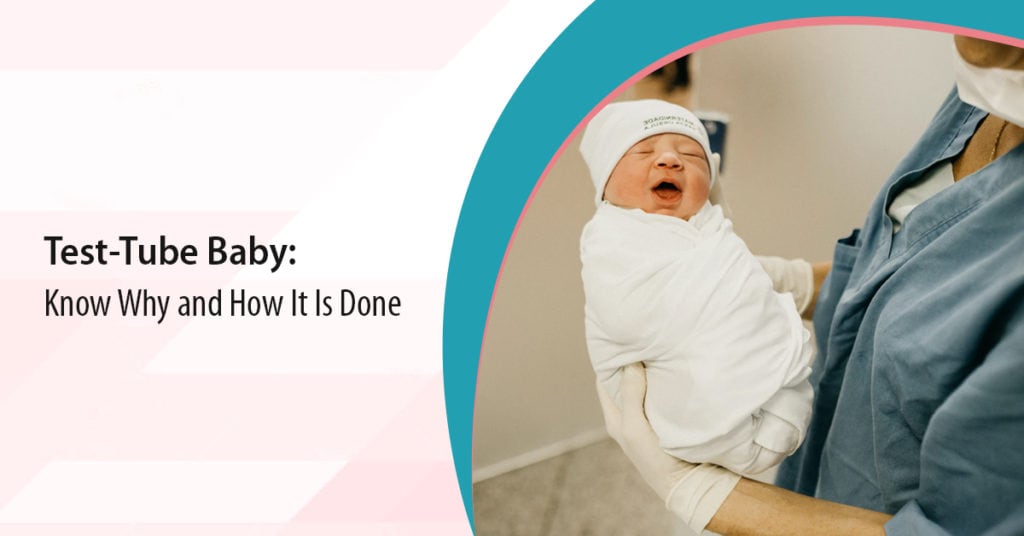
Test Tube Baby: Know Why and How It Is Done

Test-Tube baby

On July 25, Louise Brown will turn 43. On October 3, Durga whose real name is Kanupriya Agarwal will turn 43. These two, figuratively, are bound by a test tube. Brown, by now, is popular as the world’s first test tube baby — as those born from in-vitro fertilization (IVF) were referred to earlier — and Agarwal is regarded as our country’s first. Today, IVF has resulted in the birth of more than 8 million babies, offering relief to childless couples, with the promise of giving them the joy to share the “good news”. But even after 40 years, there are several queries and confusions regarding an IVF and a test tube baby. This article will elaborate on test-tube aka IVF babies, and the procedure involved.

How Is A Test Tube Baby Made

“Test tube baby” is a term used to refer to children conceived via In Vitro fertilization (IVF). Despite what the term suggests, a test tube baby is born via this process are not developed inside a test-tube. In test tube baby clinics in Kolkata, an extracted egg is fertilized on a petri dish and not in a test tube. When the embryois in between the third and the fifth day, it is transferred back to the uterus. Here’s a short explanation of what happens during the test tube or IVF process:

The woman is prescribed fertility drugs that tend to stimulate the development of oocytes (eggs) in the ovaries. This takes place over several days. Then, mature eggs are removed from the ovaries of either the egg donor or from the intended mother. This is done with the help of an ultrasound-guided needle.

The retrieved eggs are merged with sperm in the laboratory. The egg and sperm are placed on a petri dish for the sperm cell to fertilize an egg cell. A fertilized egg cell is referred to as an embryo. The resulting embryo develops for a few more days inside the laboratory. This is done under controlled conditions.

In the next step, one or, in some cases, two of the healthiest embryos are transferred to the mother’s uterus. Extra embryos are frozen to be used in future cycles. In most cases, pregnancy will be the outcome. Success rates for IVF are often satisfactory; however, pregnancy is never guaranteed.

IVF can circumvent fertility problems, including the following

  • Unexplained infertility
  • Male factor infertility
  • Blocked fallopian tubes
  • Older patients desiring a child
  • Low ovarian reserve
  • Low ovarian reserve
  • Endometriosis
  • Polycystic Ovary Syndrome (PCOS)
  • Premature Ovarian Failure

Genetic Differences In A ‘Test-Tube’ Baby

Research shows that there is no significant difference between a baby born naturally or a test tube baby, so it is quite assuring and comforting for those considering the latter. However, a few studies have shown that as a group, ART children may be at a greater risk for developing some birth defects and for being born at a low birth weight, which is again associated with type 2 diabetes, obesity, and high blood pressure in later life.

Who Should Consider Consulting an IVF Specialist

Any couple who is trying naturally but has been unsuccessful for a year can visit a test-tube baby doctor in Kolkata. It is important to detect the underlying cause of infertility so that the right treatment can be provided.

You can also consult a test-tube baby doctor if you have been diagnosed with any severe health condition and have failed to conceive either naturally or via assisted reproductive procedures. A case in point is a lady who was suffering from severe endometriosis with concomitant adenomyosis. She had visited me at my clinic after undergoing IVF 3/4 times with no luck.

Finally, she conceived via IVF after she was administered a gonadotropin agonist injection before transferring the embryos. Her pregnancy was successful and she delivered a healthy baby at term.

Contact me for a personal consultation or schedule a consultation for a face-to-face interaction if you have any questions and concerns related to test tube baby.